Navigating Jurisdictional Requirements for Software Certification in Global Casino Networks
Written by Finley Weber · Jun 9, 2026

Navigating Jurisdictional Requirements for Software Certification in Global Casino Networks
Software certification stands at the core of operations for casino networks that span multiple countries and regulatory zones, where each jurisdiction maintains distinct rules for testing, approval, and ongoing compliance. Observers note that providers must align game mechanics, random number generators, and transaction modules with local technical standards before deployment, a process that grows more intricate as networks expand into new markets during 2026.
Core Certification Bodies and Their Standards
Independent testing laboratories serve as the first checkpoint in most regions, evaluating software against criteria that cover fairness, security, and data integrity. The International Gaming Standards Association publishes technical frameworks that many operators reference when preparing submissions, while regional authorities add their own layers of review. In North America, state-level bodies such as the Nevada Gaming Control Board require detailed source code audits and live-environment simulations before granting approval, adn similar protocols appear in Canadian provinces where regulators emphasize integration with central monitoring systems.
European markets introduce additional variables through bodies that enforce both gaming-specific rules and broader data protection mandates. Providers who secure certification in one European jurisdiction often face re-testing when expanding elsewhere, because slight differences in payout verification or audit logging can trigger fresh evaluations. Data from industry reports shows that the average timeline for multi-jurisdictional approval stretches between four and nine months, depending on the complexity of the game portfolio and the number of target markets.
Cross-Border Synchronization Challenges
Global networks encounter friction when software certified for one region must interface with payment processors or player-account systems governed by another authority. Transaction logs, for instance, must satisfy record-keeping durations that vary from jurisdiction to jurisdiction, forcing developers to build modular architectures that adapt without code changes. Those who've managed large-scale rollouts frequently discover that early engagement with multiple regulators simultaneously reduces later rework, although coordination meetings add upfront costs and scheduling demands.
Technical Testing Protocols Across Regions
Laboratories apply statistical sampling methods to verify random outcomes across millions of simulated plays, then examine cryptographic protections that guard against external interference. In Asian markets, additional scrutiny often targets integration with government-run monitoring platforms that track real-time activity. Australian regulators, meanwhile, place weight on responsible-gaming modules that must activate automatically based on player behavior patterns, creating a distinct certification track that operators must navigate alongside core fairness tests.
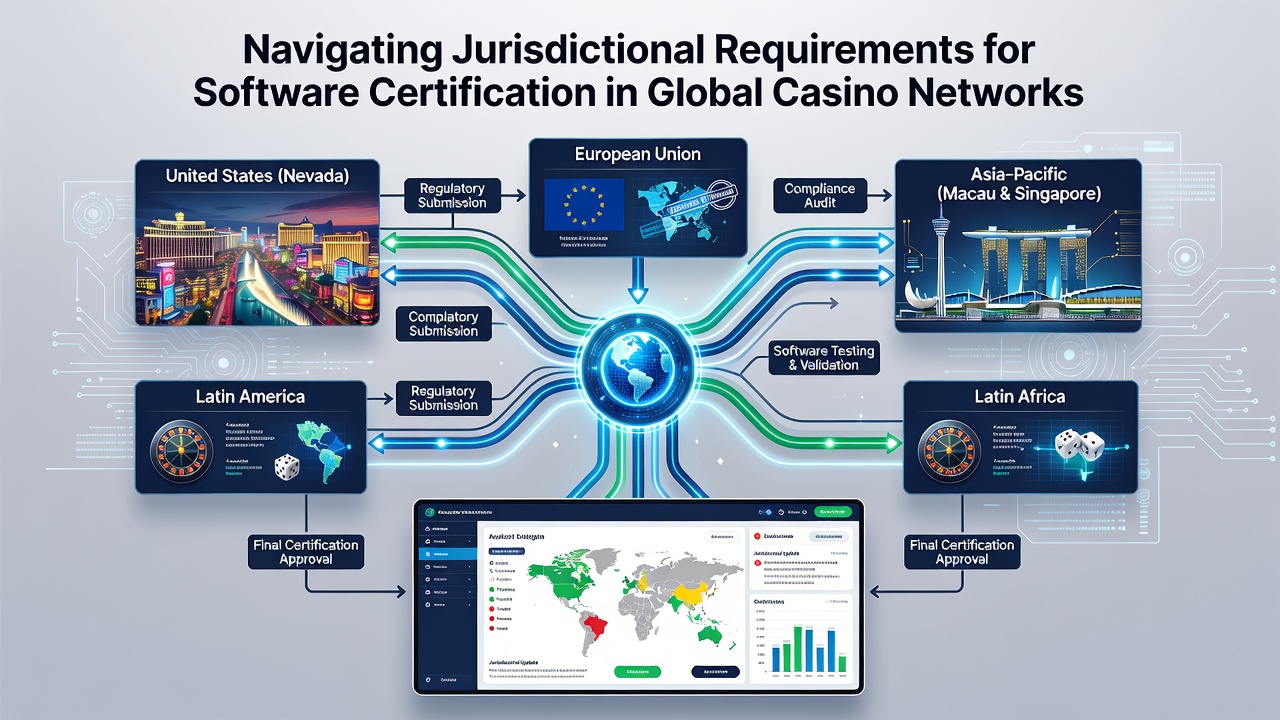
Regulatory Updates Emerging in Mid-2026
By June 2026, several jurisdictions have introduced updated guidelines that address cloud-based game servers and remote update mechanisms. These revisions require operators to demonstrate version-control systems that prevent unauthorized changes once certification is granted, and they mandate notification periods before deploying patches that affect certified components. Research from academic centers tracking gaming technology indicates that networks adopting continuous-integration pipelines now embed compliance checkpoints directly into development cycles, shortening the gap between code completion and regulatory sign-off.
Portable game providers that supply content to multiple operators face the added task of maintaining parallel certification records, each tied to the specific network configuration where their titles appear. One study revealed that providers maintaining centralized compliance databases reduced duplicate testing expenses by approximately 30 percent compared with those handling submissions on a case-by-case basis.
Practical Pathways for Compliance Teams
Compliance teams typically begin by mapping every target jurisdiction's current technical standards against the software's existing architecture. They then compile evidence packages that include test results, architectural diagrams, and risk assessments, submitting these to both laboratories and regulators in parallel where permitted. When discrepancies surface, teams iterate through targeted modifications while preserving the core certified build for markets that have already granted approval.
What's interesting is how some networks now employ dedicated regulatory liaison roles that maintain ongoing dialogue with authorities across continents. These specialists track proposed rule changes months in advance, allowing development teams to adjust designs before formal certification cycles begin. Such proactive steps prove especially valuable when entering emerging markets whose frameworks are still evolving.
Conclusion
Successful navigation of jurisdictional requirements hinges on structured preparation, early regulator engagement, and adaptable technical designs that accommodate regional variations without sacrificing certified integrity. As casino networks continue expanding globally, the ability to manage these layered certification processes efficiently determines both speed to market and long-term operational stability.