Decoding Certification Pathways Linking Regulators with Portable Game Providers and Transaction Networks
Written by Drew Frank · May 26, 2026
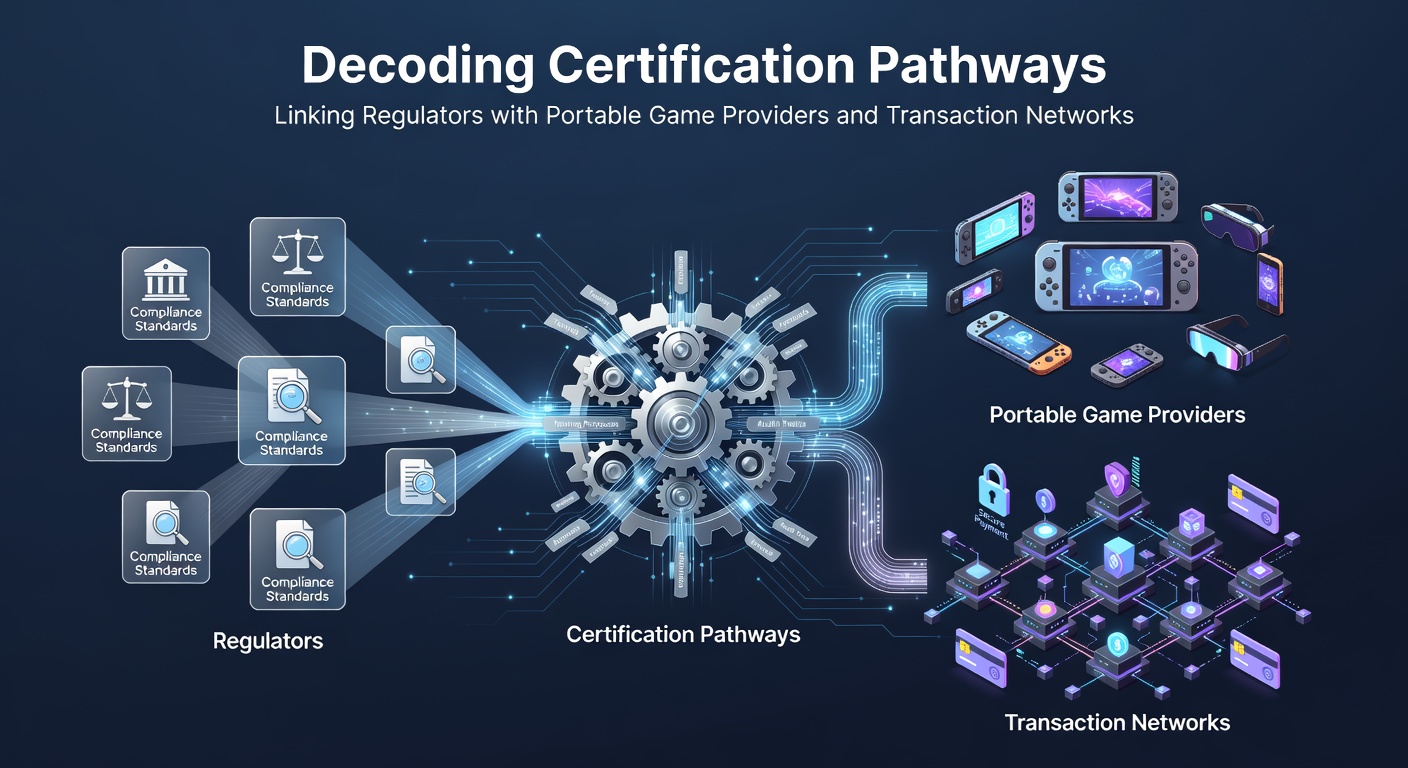
Decoding Certification Pathways Linking Regulators with Portable Game Providers and Transaction Networks
Certification pathways in the gaming sector connect regulatory authorities directly with portable game providers and transaction networks through structured verification processes that ensure compliance across mobile platforms. These pathways operate as sequential stages where initial regulatory approval leads to technical audits, followed by integration testing with payment systems. Data from industry reports shows that portable game providers must submit software builds for evaluation before deployment, while transaction networks undergo separate security checks to handle real-time transfers.
Regulatory Frameworks and Their Role in Certification
Authorities in multiple jurisdictions establish baseline requirements that portable game providers must meet before linking their systems to transaction networks. In the United States, state-level bodies such as the Nevada Gaming Control Board oversee certification for mobile applications, requiring documentation on random number generation and payout verification. Observers note that similar processes occur in European markets where bodies like the Malta Gaming Authority coordinate with providers on data protection standards, and these steps occur before any connection to payment processors is authorized.
Certification timelines often span several months, with providers submitting evidence of adherence to technical specifications. Researchers at academic institutions have documented how regulators review source code and conduct live environment tests, after which approved providers receive digital certificates that transaction networks reference during onboarding.
Integration Between Portable Game Providers and Transaction Networks
Portable game providers develop applications for smartphones and tablets that must interface securely with transaction networks to process deposits and withdrawals. This integration relies on certification pathways that verify API compatibility and encryption protocols. Figures from 2025 industry analyses reveal that providers typically undergo two rounds of testing, one focused on game mechanics and another on payment flow accuracy, before regulators grant final clearance.
Transaction networks, in turn, validate their own infrastructure against the same regulatory benchmarks. Those who've examined these systems point out that networks demonstrate capacity for handling encrypted data streams from multiple game providers simultaneously, with certification ensuring that mobile sessions maintain uninterrupted verification during gameplay. In May 2026, several providers completed updated certifications that streamlined these connections for new regional markets.
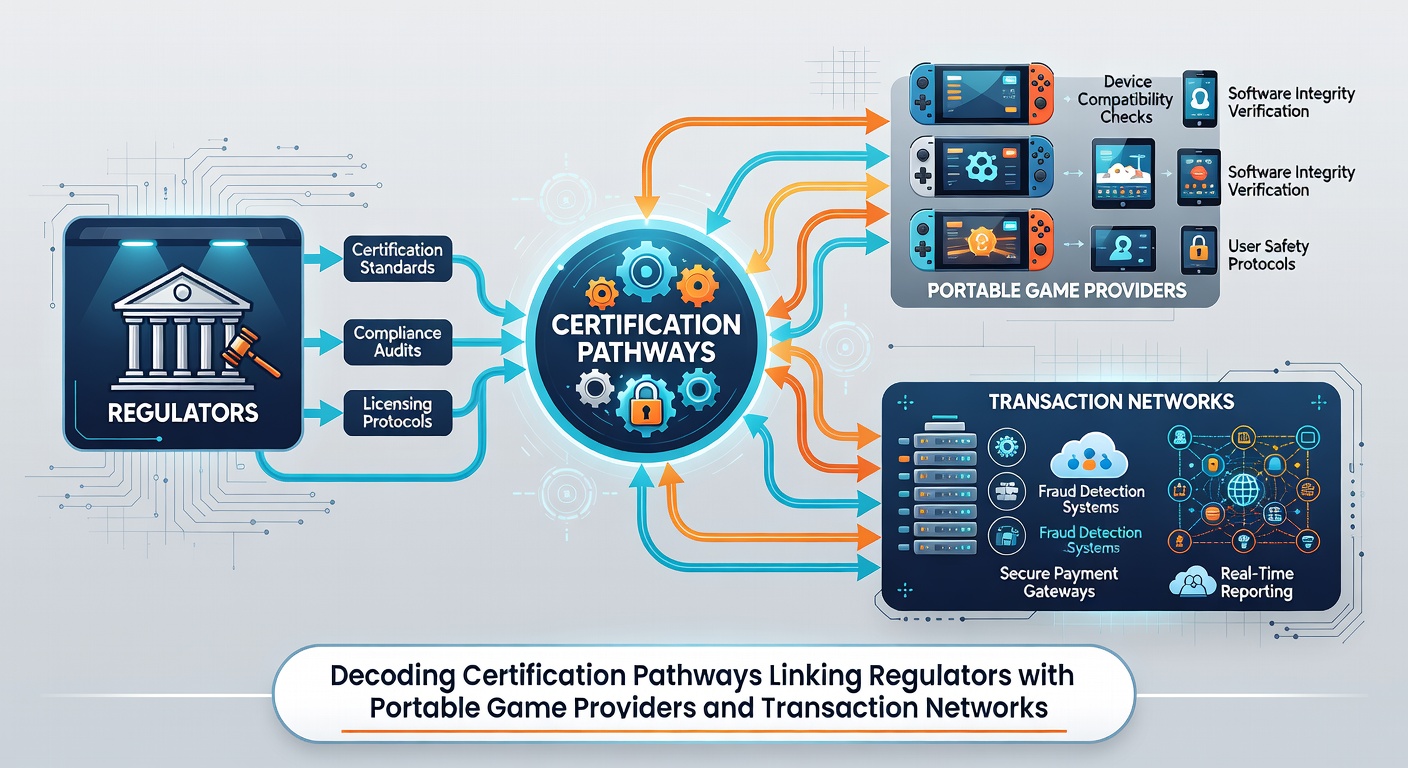
Technical Audits and Compliance Verification Steps
Technical audits form the core of certification pathways, where independent laboratories assess portable game software against regulator-defined criteria. These evaluations include checks on fairness algorithms, security measures, and transaction logging. According to reports issued by the European Gaming and Betting Association, audit results feed directly into regulatory databases that transaction networks consult before activating provider partnerships.
Providers receive detailed feedback after each audit round, allowing adjustments that align with standards across jurisdictions. Data indicates that successful completion leads to issuance of compliance seals that networks display during user transactions, confirming that all parties have satisfied verification requirements. This process repeats periodically, often annually, to maintain active certification status.
Challenges in Cross-Border Certification Coordination
Cross-border operations introduce additional layers to certification pathways because portable game providers must satisfy varying rules from different regulatory bodies. Transaction networks manage these differences by maintaining separate certification tracks for each region. Studies from research institutions have shown that coordination between regulators reduces duplication, yet providers still navigate distinct documentation sets for markets in North America, Europe, and Asia-Pacific.
Network operators report that certification delays arise primarily from mismatched technical standards between jurisdictions, prompting collaborative efforts among regulators to harmonize certain testing protocols. In practice, these adjustments allow portable providers to accelerate deployment once initial approvals are secured.
Future Developments in Certification Pathways
Emerging technologies such as blockchain-based verification tools are entering certification discussions among regulators and industry participants. Portable game providers explore these tools to automate parts of the audit process, while transaction networks test their integration for enhanced traceability. Reports from 2026 highlight pilot programs where digital ledgers record certification milestones, making pathway tracking more transparent for all involved parties.
Conclusion
Certification pathways continue to evolve as regulators, portable game providers, and transaction networks refine their interconnections. These structured processes maintain consistent standards that support secure mobile gaming operations across regions. Ongoing coordination efforts ensure that updates in one area, such as new technical requirements, propagate efficiently through the entire chain without disrupting established links.