Bolstering Bonus Integrity with Advanced Verification Protocols in Mobile Live Dealer Platforms
Written by Tina Bauer · Jul 26, 2026
Bolstering Bonus Integrity with Advanced Verification Protocols in Mobile Live Dealer Platforms
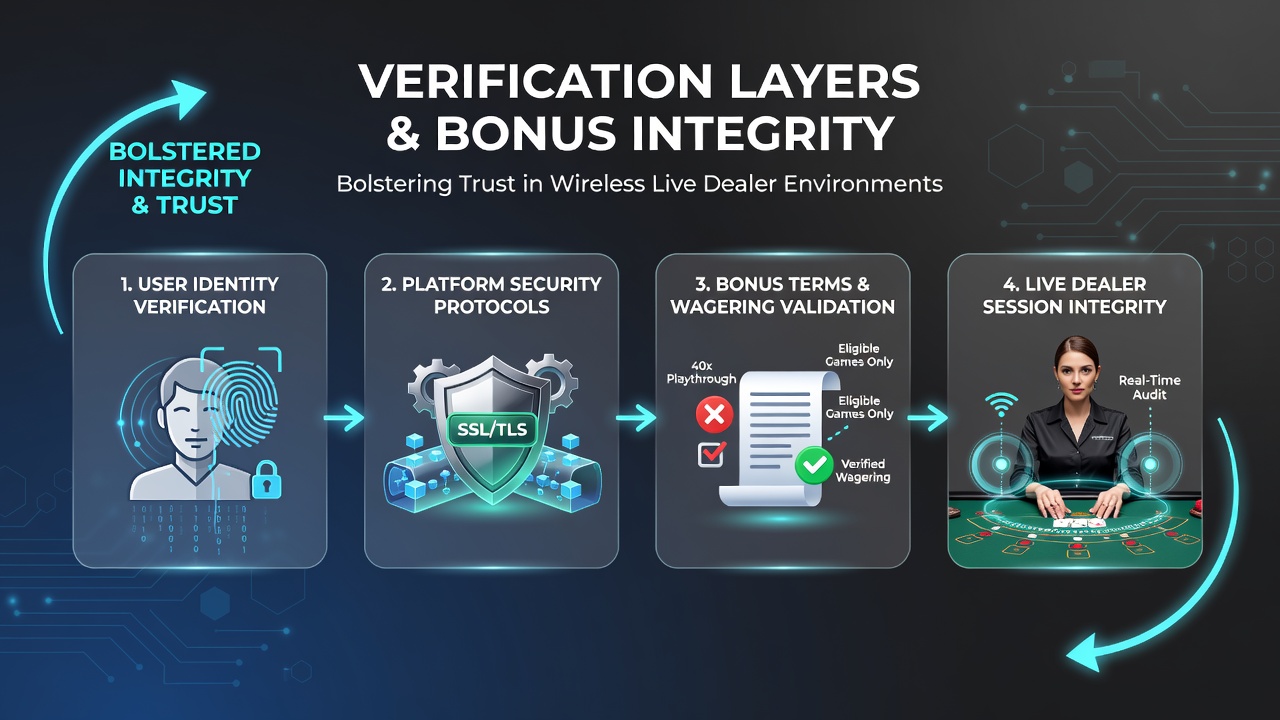
Wireless live dealer platforms have expanded rapidly through 2026, and verification layers now form the core defense for bonus programs that operators distribute across mobile networks. These systems combine identity checks, device analysis, and behavioral monitoring to limit abuse while preserving legitimate player access. Data from industry reports indicates that multi-stage authentication reduces fraudulent bonus claims by significant margins each quarter, especially in jurisdictions where regulators track promotional compliance closely.
Operators deploy initial registration filters that require government-issued identification and address confirmation before any bonus becomes active. This step alone blocks most attempts to create duplicate accounts from single users. Subsequent layers examine device fingerprints, IP history, and SIM verification to detect patterns that suggest coordinated abuse across multiple wireless connections. Research conducted by gaming analytics firms shows that platforms applying these combined checks experience fewer chargebacks tied to bonus misuse than those relying on single-point verification.
Device and Location Authentication in Real Time
Wireless environments introduce variables that fixed-line platforms avoid, including frequent IP changes and shared network use. Verification tools counter these issues through continuous geolocation cross-checks and SIM-based authentication that ties each session to a verified handset. When players attempt to claim bonuses while routing traffic through VPNs or proxy services, automated flags trigger additional review or temporary holds until compliance teams confirm legitimacy. Figures released by the Nevada Gaming Control Board in early 2026 highlight how such controls have tightened compliance rates for mobile operators licensed in that state.
Behavioral analytics form another layer that operates alongside static checks. Algorithms track session length, betting patterns, and navigation speed to distinguish routine play from scripted or automated activity designed to clear bonus wagering requirements quickly. One study from a European research consortium found that platforms integrating these analytics saw a measurable drop in accounts flagged for bonus-related irregularities during the first half of 2026.
Regulatory Oversight and Cross-Platform Data Sharing

Regulators in multiple regions now require documented verification workflows as part of licensing renewals. The Malta Gaming Authority and iGaming Ontario both updated guidance in July 2026 that emphasizes audit trails for every bonus activation and redemption. These requirements push operators to maintain centralized logs that record each verification stage, allowing inspectors to reconstruct events when disputes arise. Industry associations such as the European Gaming and Betting Association have published frameworks that encourage standardized data exchange between licensed platforms to identify repeat offenders who migrate accounts across sites.
Cross-platform data sharing reduces the effectiveness of tactics that once allowed users to exploit welcome offers repeatedly. When one operator flags an account for suspicious activity, participating networks receive anonymized alerts that prevent the same pattern from succeeding elsewhere. Observers note that this coordinated approach has gained traction since mid-2026, particularly among operators serving overlapping mobile markets in North America and Europe.
Impact on Player Experience and Platform Operations
Verification layers add steps to the player journey, yet streamlined interfaces keep friction low for verified users. Many platforms now complete primary checks within seconds using biometric options such as facial recognition or fingerprint matching already present on modern handsets. Players who complete these steps once gain faster access to subsequent bonuses, while new or flagged accounts face graduated scrutiny. This tiered model balances security needs with retention goals, and operational data indicates that verified accounts generate higher lifetime value because they complete wagering requirements without interruption.
Live dealer environments present additional challenges because sessions involve real-time interaction with dealers and other participants. Verification must therefore occur without disrupting video streams or betting windows. Background processes handle most checks, surfacing only when anomalies appear, which keeps the experience intact while maintaining integrity. Reports from platform providers confirm that seamless integration of these systems correlates with lower complaint volumes regarding delayed bonus credits.
Conclusion
Verification layers have become essential infrastructure for maintaining bonus integrity on wireless live dealer platforms. By combining identity confirmation, device tracking, behavioral monitoring, and regulatory data sharing, operators reduce abuse while meeting oversight standards that evolved through 2026. Continued refinement of these protocols supports sustainable promotional offerings as mobile participation grows across regulated markets.